







403
Sorry!!
Error! We're sorry, but the page you were looking for doesn't exist.
India Eyes Full Smart Meter Interoperability To Avoid Vendor Lock-In
(MENAFN- AsiaNet News)
India to Mandate Smart Meter Interoperability
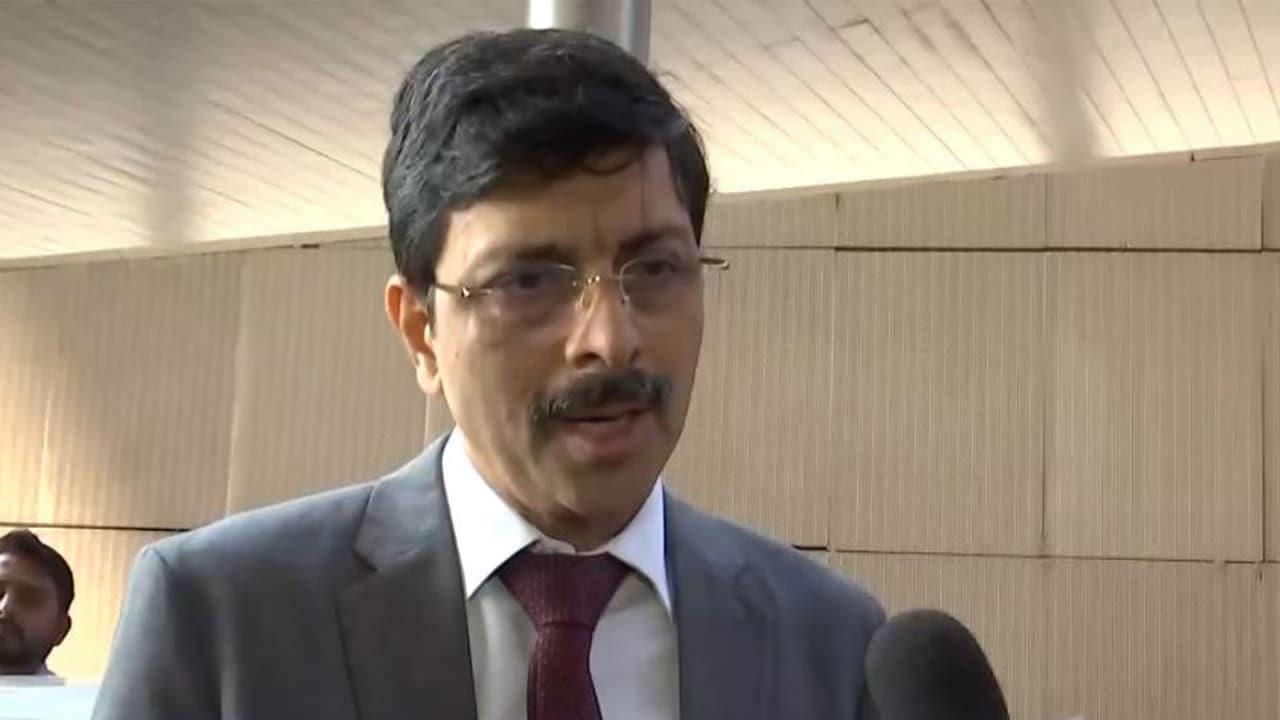
India plans to mandate full interoperability across smart electricity meters to avoid vendor lock-ins and give utilities greater flexibility, Power Ministry Secretary Pankaj Agarwal said on Sunday. Speaking on the sidelines of the National Conference on the Use of AI/ML in the Power Distribution Sector, Agarwal said the government wants meters from different manufacturers to operate seamlessly on common protocols. "There should not be any locking between any manufacturer and any protocol. That's the next level of flexibility we are looking for," he said, adding that the rollout target could be set for April 2026 or January 2027.
Future Energy Mix and Power Capacity
On India's long-term energy mix, Agarwal said the country plans to maintain 307 gigawatts of coal-based thermal power capacity by 2035 to secure future electricity demand. "Beyond this plan, it's early to comment," he said, noting that capacity requirements will continue to be reviewed.
Easing Transmission Constraints and Managing Load
Agarwal said the current average power tariff of 3.30 rupees per unit remains "reasonable".
He added that transmission constraints have begun to ease after the commissioning of the Khetri-Narela line, which is now evacuating more than 4.5 GW of power. Another major line, Badla-Seekar in Rajasthan, is expected to be commissioned by the end of December.
The secretary said increasing utilisation of existing transmission corridors and accelerating energy storage deployment are key to managing load growth. Private developers have shown strong interest, he said, with several filing regular applications to the Central Transmission Utility (CTU) to set up storage projects in Rajasthan, Gujarat and other states.
Progress Under Revamped Distribution Sector Scheme (RDSS)
According to data provided by the Power Ministry in July, under the Revamped Distribution Sector Scheme (RDSS), 20.33 crore smart meters have been sanctioned in 28 States/UTs, of which 2.41 crore have been installed. In the state of Gujarat, 1.67 crore smart meters have been sanctioned under RDSS, of which 20.94 lakh have been installed as of July 15.
The smart meters benefit both consumers and distribution companies by reducing billing errors, enhancing energy efficiency, and providing greater convenience for users. They also help DISCOMs reduce losses, optimise power purchase costs, and integrate renewable energy.
The government of India launched the Revamped Distribution Sector Scheme (RDSS) with an outlay of Rs 3,03,758 crore with an estimated Gross Budgetary Support (GBS) of Rs 97,631 crore from the Central Government.
The Scheme has been formulated to improve the quality and reliability of supply to consumers through a financially sustainable and operationally efficient distribution sector. The scheme aims to reduce the AT & C losses and ACS-ARR gap at the pan-India level. The scheme has a duration of 5 years, i.e., from (FY 2021-22 to FY 2025-26). (ANI)
(Except for the headline, this story has not been edited by Asianet Newsable English staff and is published from a syndicated feed.)
Legal Disclaimer:
MENAFN provides the
information “as is” without warranty of any kind. We do not accept
any responsibility or liability for the accuracy, content, images,
videos, licenses, completeness, legality, or reliability of the information
contained in this article. If you have any complaints or copyright
issues related to this article, kindly contact the provider above.
Most popular stories
Market Research

More Story






Comments
No comment