




403
Sorry!!
Error! We're sorry, but the page you were looking for doesn't exist.
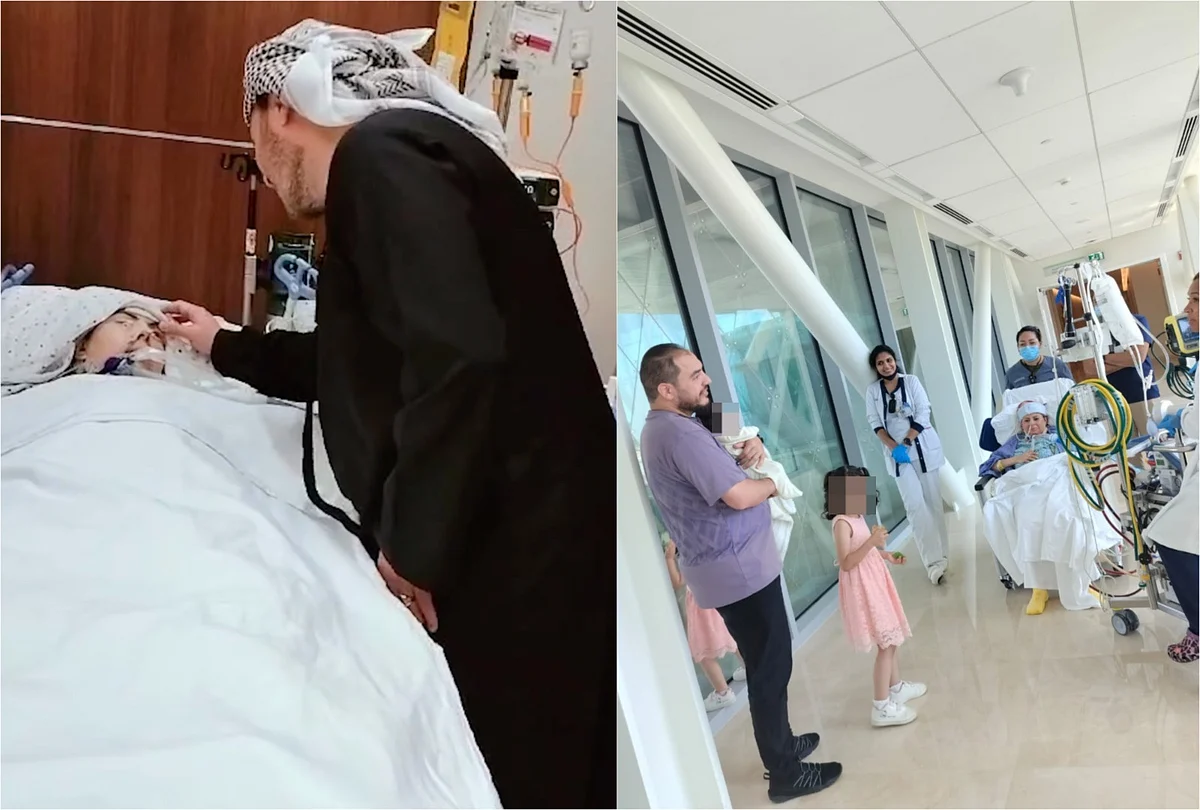
UAE: Mother Wakes From 3-Month Coma To Discover She Gave Birth To Baby Girl
(MENAFN- Khaleej Times)
A UAE mother who spent three months in a coma woke up paralysed, voiceless, and found out she had given birth to a girl - a revelation she describes as“the happiest news” after months hovering“between life and death.”
Treated at Cleveland Clinic Abu Dhabi (CCAD), doctors later told Amal Othman that she had survived repeated organ failure, emergency surgery, and one of the longest ECMO cases ever recorded.
Recommended For You Dubai Police call on motorists to follow rules during Eid Al Etihad celebrationsAmal's ordeal began during a trip to Umrah while pregnant.“I remember that I was in Umrah, pregnant with a baby girl and I had a mild cough. The next day, my cough was worse and then I had a high fever,” recalled the 40-year-old.“Then the light went off for a long time."
When the Ajman resident regained consciousness months later, she saw strange machines around her.“I woke up to many unfamiliar people and devices,” said the Jordanian expat. Tubes and monitors filled her room.
“I couldn't speak. I couldn't move. It was strange, like being in an unknown place.” She recalls family and staff gently approaching her.“People came to me and said they love me, that I am safe and will be safe,” she recalled. At first, she did not understand why she was in a hospital or that she had delivered her child months earlier.
Amal's husband gently broke the news.“My husband came in and told me that I had been in a coma for three months.” She described the coma as being lost in an endless, unlit space. On his second visit, he told her,“Your children are doing well, and we have a daughter who is four and a half months old. And this is her picture.”
“That was the beginning of hope,” she said.“I felt that my life would continue, because God had written for my daughter to come to this life early on.”
Visions inside the coma
One of the most striking things she saw while unconscious was visions of her husband moving to a new home - something she did not know was happening in real life.“I saw him moving furniture, changing rooms,” Amal recounted.“When I woke up, and he told me he had moved, I was shocked. I had seen it all.”
CCAD doctors who treated her say she had been suffering from severe influenza that escalated into acute respiratory distress syndrome (ARDS), followed by air and blood accumulation in her chest.
Longest ECMO cases ever recorded
Dr Fadi Hamed, Critical Care Physician at CCAD, said,“It was one of the complicated and complex stories we have experienced. The patient was suffering from a severe illness due to influenza. Amal needed surgical procedures regarding thoracic surgery. There were really critical operations because she had ARDS, and also hemothorax and pneumothorax - a collection of blood and air inside the chest."
Dr Ihab Ahmed, who specialises in respiratory failure, explained the decision to place her on ECMO.“I put her on ECMO, which is an external body device. It is the longest case that has been put on ECMO - not only at Cleveland, but it was also one of the longest worldwide.”
"324 days on ECMO,” he said.“This means she went through numerous complications, but thank God, she overcame all of them."
Physical therapist Rami Boyles said during Othman's 11 months in the hospital,“Her movement was very difficult. She couldn't move her hands or legs. We started working with her while she was in bed, then at the edge of the bed,” he explained.“We didn't lose hope, and we continued with her until she got stronger and could stand; we feel we have done something very valuable.”
“You could write a book about this patient,” added Dr Hamed.“Her case was proof for physicians at any stage of their careers that if they work as one fully integrated team, while holding on to hope, it could lead to positive results and a miracle like in the case of our patient, Amal.”
Learning to walk again - with an entourage of doctors and machines
As Amal began rehabilitation, even simple movements required a team.“When I walked in the corridors, doctors and nurses surrounded me, carrying machines, oxygen, and devices,” she said.“It was like I couldn't move without the whole team moving with me.”
Although she survived the crisis, her medical needs persist. She said part of her treatment caused the loss of colon function, so she now relies on an external colon pouch.“I still need a colon transplant,” Amal said.“I am using an external colon now. I need financial support to complete the surgery.” She emphasised that while her recovery has been miraculous, her medical journey is not over.

Legal Disclaimer:
MENAFN provides the
information “as is” without warranty of any kind. We do not accept
any responsibility or liability for the accuracy, content, images,
videos, licenses, completeness, legality, or reliability of the information
contained in this article. If you have any complaints or copyright
issues related to this article, kindly contact the provider above.
Most popular stories
Market Research

More Story






Comments
No comment