



403
Sorry!!
Error! We're sorry, but the page you were looking for doesn't exist.
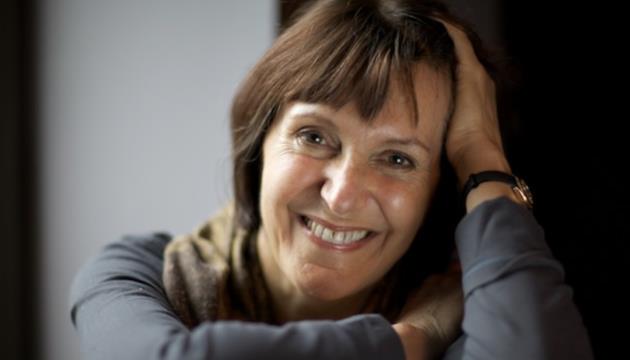
Marina Lewycka, British Writer Of Ukrainian Descent, Dies At 79
(MENAFN- UkrinForm) According to Ukrinform, media outlet Suspilne Kultura reported this in an article.
The writer's agent, Bill Hamilton, described her as a person with a "unique comic sensibility,... matched with a campaigning sense of social justice."
In her later years, Lewycka struggled with multiple system atrophy (MSA), a rare, progressive neurological disorder that causes the degeneration of nerve cells in the brain. She is survived by her partner, Donald Sassoon, and her daughter, Sonia.
Juliet Annan, her former editor, also paid tribute to the author. "It was the greatest pleasure to edit and publish Marina," Annan said. "There are very few true originals around and she was one of them – funny, warm, eccentric, political in the best way imaginable, impossible and wonderful. Her crusading fiction will live on as an extraordinarily serious and hilarious record of times and places."
Dr Ruth Deller, a principal lecturer in Media and Communications at Sheffield Hallam, who was tutored by Marina Lewycka in the 1990s, described her as a "very twinkly, very chatty, very sociable, funny" character, whose comedy "came through in her books".
Lewycka was born in a refugee camp in Germany after World War II to a family of Ukrainians who had been brought there by the Nazis as forced laborers. Later, her family moved to the United Kingdom. Until 2012, she taught media studies at the University of Sheffield, after which she devoted herself full-time to her writing career.
Her debut novel, A Short History of Tractors in Ukrainian, was published when she was 58 and became an unexpected international bestseller. The novel has been translated into 35 languages, including Ukrainian. The story was closely tied to her own life - tense relationships with siblings, the loss of her mother, and an eccentric engineer father who married a much younger woman.
For this book, she received the Bollinger Everyman Wodehouse Prize for comic fiction, becoming the only woman to win it in its first 16 years. She was also longlisted for the Booker Prize and shortlisted for the Orange Prize for Fiction.
Her later novels included Two Caravans (2007), shortlisted for the Orwell prize for political writing; We Are All Made of Glue (2009); Various Pets Alive and Dead (2012); and The Lubetkin Legacy (2016), which was again shortlisted for the Wodehouse prize. Her final novel, The Good, the Bad and the Little Bit Stupid, was published in 2020.
Translated into Ukrainian by Oleksa Negrebetskyi were A Short History of Tractors in Ukrainian and Various Pets: Alive and Dead - both published by Tempora in 2013. In 2008, Two Carriages was published in Ukrainian by Fakt, translated by Svitlana Pyrkalo, but only in a 200-copy print run.
In addition to fiction, she wrote several practical guides for caregivers of elderly people, published by the charity Age Concern.
Read also: Moldovan parliament terminates agreement with Russia on cultural centersAs Ukrinform reported, the founder of the publishing house Samit-Knyha, Igor Stepurin, also passed away.
Photo: Ben McMillan

Legal Disclaimer:
MENAFN provides the
information “as is” without warranty of any kind. We do not accept
any responsibility or liability for the accuracy, content, images,
videos, licenses, completeness, legality, or reliability of the information
contained in this article. If you have any complaints or copyright
issues related to this article, kindly contact the provider above.
Most popular stories
Market Research

More Story





Comments
No comment