







403
Sorry!!
Error! We're sorry, but the page you were looking for doesn't exist.
Kashmiris Turn To Regulated Gold Amid Rising Fraud Risk
(MENAFN- Kashmir Observer)
File photo
File photo
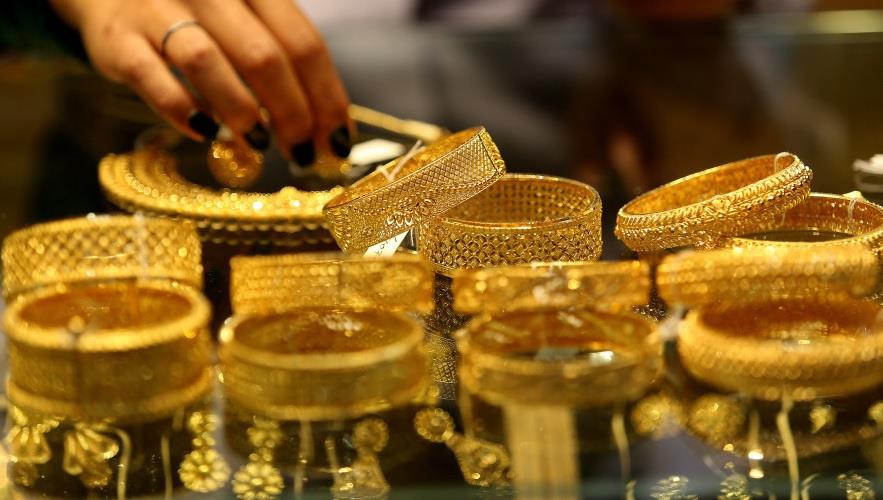
In Srinagar's Saraf Kadal market, a 62-year-old shopkeeper, Bashir Ahmad, remembers the day a couple walked in with wedding bangles they had bought only a year earlier.
The family had fallen into debt and wanted to sell.
Bashir weighed the pieces, deducted making charges, and quoted a figure. The husband objected:“But gold is at ₹75,000 per 10 grams today.”
Bashir shrugged:“That's the rate, but ornaments don't return full value.”
The man left angry. His wife left silent. Bashir says it happens every week.
Read Also Gold Falls Rs 500 To Rs 1,01,020/10 G, Silver Trades Flat Gold Retreats From All-Time High, Ends Rs 900 Lower At Rs 1,02,520/10gFor many Kashmiri families, this is the shock, realizing that gold in jewelry form is not the golden guarantee they assumed.
In Baramulla, 38-year-old schoolteacher Shafiqa recalls how she and her neighbours trusted a local agent who promised fixed monthly returns if they pooled money into a“gold trading scheme.”
The man distributed receipts, even showed photographs of bullion bars he claimed were stored in Delhi.
Within eight months, he vanished.
Families lost between ₹50,000 and ₹3 lakh each.“We felt robbed twice,” Shafiqa says,“once of money, then of dignity.”
Such cases rarely make it to court, since the scheme was unregulated, SEBI and RBI had no jurisdiction.
The Ministry of Finance warns that these deals often resemble Ponzi schemes, paying old investors with the money of new ones until the chain breaks.
Word-of-mouth assurances can still override caution in Kashmir, where financial literacy remains patchy.
Contrast this with the story of 71-year-old Ghulam Nabi, a retired clerk from Anantnag.
In 2019, on his son's advice, he bought Sovereign Gold Bonds through J&K Bank. Each bond was worth the price of one gram of gold. He invested ₹2 lakh.
“I didn't understand it fully,” he admits,“but my son said the government is backing it.”
Today, his bonds have more than doubled in value, and he also receives yearly interest credited to his savings account.“If I had kept it as bangles,” he smiles,“I would have lost half in making charges.”
This example is spreading slowly. Families who once stored ornaments in cupboards are now lining up at banks to buy bonds. J&K Bank recently began distributing them through 75 branches and plans to expand online access.
In Sopore, 26-year-old entrepreneur Danish Mir opened a demat account during the pandemic. With small SIPs in gold mutual funds, he says he has grown comfortable with markets.
“I used to think gold means only a ring or a chain. Now I can buy one gram digitally every month,” he explains.
His motivation came after his cousin's home was burgled. The family lost jewelry worth over ₹5 lakh.“That story was enough. I decided I'd never keep gold at home again.”
Demat accounts eliminate such risks. ETFs and gold funds stored electronically are backed by SEBI's oversight, and CKYC ensures the investor's identity is verified.
Banks in Srinagar now actively pitch demat gold to younger clients, framing it as“gold without theft.”
But not all stories end as lessons in caution.
Abdul Rashid, a shopkeeper in Pulwama, discovered the Multi Commodity Exchange (MCX) through a friend. Intrigued by the chance to trade gold futures, he invested using borrowed funds.
When prices dipped, he lost nearly 40 percent of his capital in a week.“It felt like gambling,” he says,“and I was not prepared.”
His case illustrates why MCX, with its leverage and volatility, suits only active traders, not families looking for safe investments.
India owns an estimated 27,000 tons of household gold, with Kashmir contributing significantly through wedding and dowry traditions. Yet less than 10 percent of that is in financial form.
Nationally, SGBs issued in 2019–20 are now yielding up to 147 percent returns. In Kashmir, uptake has grown since J&K Bank began distribution drives.
At the same time, local fraud cases, from“gold-linked” schemes to even bank misappropriations like the ₹5-crore Shopian scandal, have left households wary.
The anecdotes cut both ways. There is Bashir Ahmad's customer, discovering how ornaments shrink in value, and Shafiqa's community, learning that unregulated promises end in loss.
Yet there is also Ghulam Nabi in Anantnag, living proof of government bonds' resilience, and Danish in Sopore, proof that younger Kashmiris can adapt to digital platforms.
In every case, the underlying truth is clear: the valley's trust in gold is unshaken, but its form is shifting. Families still gift bangles at weddings, yet they also track bond maturity dates on smartphones.
The golden chest of Kashmiri tradition is being refitted with locks of regulation and tools of modern finance.
The metal remains the same, but the way it is held could define how secure the next generation feels.
Legal Disclaimer:
MENAFN provides the
information “as is” without warranty of any kind. We do not accept
any responsibility or liability for the accuracy, content, images,
videos, licenses, completeness, legality, or reliability of the information
contained in this article. If you have any complaints or copyright
issues related to this article, kindly contact the provider above.
Most popular stories
Market Research

More Story








Comments
No comment