




403
Sorry!!
Error! We're sorry, but the page you were looking for doesn't exist.
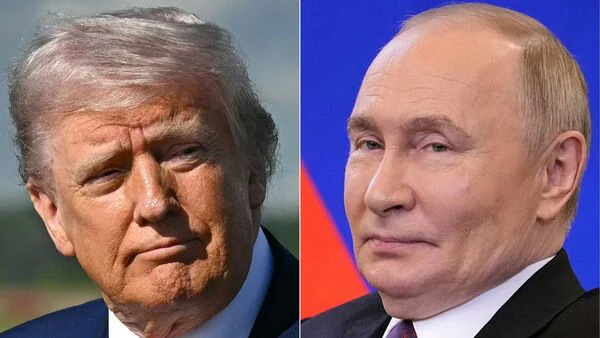
Russia Exits Nuclear Treaty With US: Who's Threatened, Is A New Power Standoff Emerging? All You Need To Know
(MENAFN- Live Mint) In a dramatic escalation of tensions with the United States, Russia has formally declared it will no longer honour self-imposed limits under the Intermediate-Range Nuclear Forces (INF) Treaty, signalling a renewed push to deploy short- and intermediate-range nuclear missiles.
The development, confirmed on Tuesday by the Russian Foreign Ministry, comes amidst rising geopolitical friction - fuelled by sanctions, nuclear posturing, and a heated standoff over global oil trade.
Here's a breakdown of what this means, who it affects, and why the world is watching closely.
Also Read | Oil steadies as OPEC output hikes counter Russia disruption concerns Why has Russia abandoned the INF Treaty?Russia's decision follows a sharp uptick in nuclear rhetoric and military manoeuvring from both sides. In a strongly worded statement, Moscow said it“no longer considers itself bound” by its“previously adopted self-restrictions” under the INF Treaty.
The Kremlin cited the United States' own actions, particularly the deployment of intermediate-range missiles in Europe and Asia, as justification.
The Russian Foreign Ministry also pointed to recent political tensions and military threats from Washington, including the stationing of American nuclear submarines in undisclosed locations.
These moves, Moscow claims, undermine the spirit of mutual restraint that once defined the landmark treaty.
Also Read | Russia mocks Trump tariff threats: 'Unable to accept erosion of its dominance' Which country is threatened by this?The primary countries threatened by Russia's recent exit from the Intermediate-Range Nuclear Forces (INF) Treaty with the United States are the NATO member states in Europe, as well as countries in the Asia-Pacific region.
Russia's withdrawal and its intention to redeploy such missiles raise the threat level for European countries that lie in missile range, including NATO allies bordering Russia.
Additionally, the Asia-Pacific region faces increased risk due to reports of U.S. plans to deploy intermediate-range missiles in places like the Philippines and Germany, which Russia views as hostile moves. Moscow has pointed specifically to these deployments, along with NATO's stance, as justifications for ending its self-imposed moratorium on missile deployment, arguing that such actions threaten Russian national security.
Also Read | Russian oil import cuts could hit Indian OMCs GRM by $1–1.5/bbl, says report What is the INF Treaty, and why does it matter?Signed in 1987 between the United States and the former Soviet Union, the Intermediate-Range Nuclear Forces Treaty was a cornerstone of Cold War arms control.
It eliminated an entire class of nuclear-capable missiles with ranges between 500 and 5,500 kilometres, drastically reducing the risk of a fast-escalating nuclear conflict in Europe.
However, the treaty began to unravel when the US withdrew in 2019, citing alleged Russian violations. At the time, Moscow responded by pledging not to deploy such missiles unless the US did so first - a promise it has officially revoked in 2025.
Also Read | Trump threatens India with steep tariff hike for Russian oil purchases What triggered this latest fallout between US and Russia?Tensions reached a boiling point last week when US President Donald Trump announced sweeping new sanctions on Russia. These included threats to penalise countries, including India and China, that continue to purchase Russian oil.
Donald Trump set an August 8 deadline for Russian President Vladimir Putin to agree to a ceasefire in Ukraine, warning of broader consequences if the Kremlin failed to comply. He also revealed that two US nuclear submarines had been repositioned for combat readiness.
In response, Russian officials warned of the dangers of escalating nuclear brinkmanship. Kremlin spokesman Dmitry Peskov urged all parties to be“very, very careful” with nuclear rhetoric.
Also Read | Russia urges caution on Trump's nuclear submarine posturing, urges caution How is India affected by US threats?India finds itself in Washington's crosshairs over its continued import of Russian crude oil. The US recently announced a 25 per cent tariff on Indian goods and hinted at further penalties for New Delhi's defence and energy ties with Moscow.
New Delhi hit back, calling the measures“unjustified and unreasonable”. In a strongly worded statement, India's Ministry of External Affairs (MEA) vowed to take“all necessary measures” to protect the country's economic security and national interest.
External Affairs Minister S Jaishankar, addressing a public event, underlined India's support for a“fair global order” - one not dominated by a few powers. He also noted the hypocrisy of the West, pointing out that the US and EU continue to import certain commodities from Russia, even as they criticise others for doing the same.
Also Read | Back in black: Indian companies start FY26 on a profitable note Who are the biggest buyers of Russian oil?Since the European Union banned most Russian oil imports in January 2023, trade routes have dramatically shifted eastwards. According to reports by the Associated Press, China, India, and Turkey have emerged as the top buyers of Russian energy exports.
China leads the list, having imported approximately $219.5 billion worth of Russian oil, gas, and coal. India follows with $133.4 billion, while Turkey has imported around $90.3 billion.
India's imports from Russia rose from less than 1 per cent before the Ukraine war to over 35–40 per cent of total oil purchases today. This shift was partly encouraged by Western powers early in the conflict, as a means to maintain global supply and stabilise prices - a stance now being conveniently reversed.
Also Read | Will Trump's tariff war push India closer to Russia and China? Is a new Cold War beginning?Russia's exit from the INF Treaty and its renewed missile ambitions have rekindled fears of a Cold War-style arms race . The mutual deployment of nuclear-capable assets, tit-for-tat sanctions, and rising distrust between global superpowers suggest that the post-Cold War era of strategic cooperation may be unraveling.
Experts warn that without a framework like the INF to manage military escalation, the world faces a higher risk of miscalculation and conflict. The lack of direct communication channels between Washington and Moscow, paired with rising regional tensions in Asia, only adds to the uncertainty.
Also Read | 'Unjustified': India counters Trump's tariff threat What happens next?As the 8 August ceasefire deadline approaches, all eyes are on Moscow. Whether President Putin will respond to Trump's ultimatum remains to be seen. Meanwhile, India, China, and other key global players may find themselves caught in the crossfire of a deepening US-Russia confrontation.
For now, the collapse of yet another nuclear treaty signals a more dangerous, unstable world - one where deterrence may once again be determined not by diplomacy, but by the presence of missiles on hair-trigger alert.

Legal Disclaimer:
MENAFN provides the
information “as is” without warranty of any kind. We do not accept
any responsibility or liability for the accuracy, content, images,
videos, licenses, completeness, legality, or reliability of the information
contained in this article. If you have any complaints or copyright
issues related to this article, kindly contact the provider above.
Most popular stories
Market Research

More Story



Comments
No comment